

Where Have I Been? Grief, M.E. and Finding My Way Back to Writing

There's a rather conspicuous gap in my publishing history.
If you've been following my writing journey, you might have noticed that while I've been happily chatting about books, sharing Egyptian mythology, redesigning covers and generally making a nuisance of myself on social media, there haven't been any shiny new novels appearing for a while.
So where have I been?
The short answer is that life happened.
The longer answer is a little more complicated, considerably more painful, but ultimately rather hopeful.
When Life Writes a Story You Never Wanted
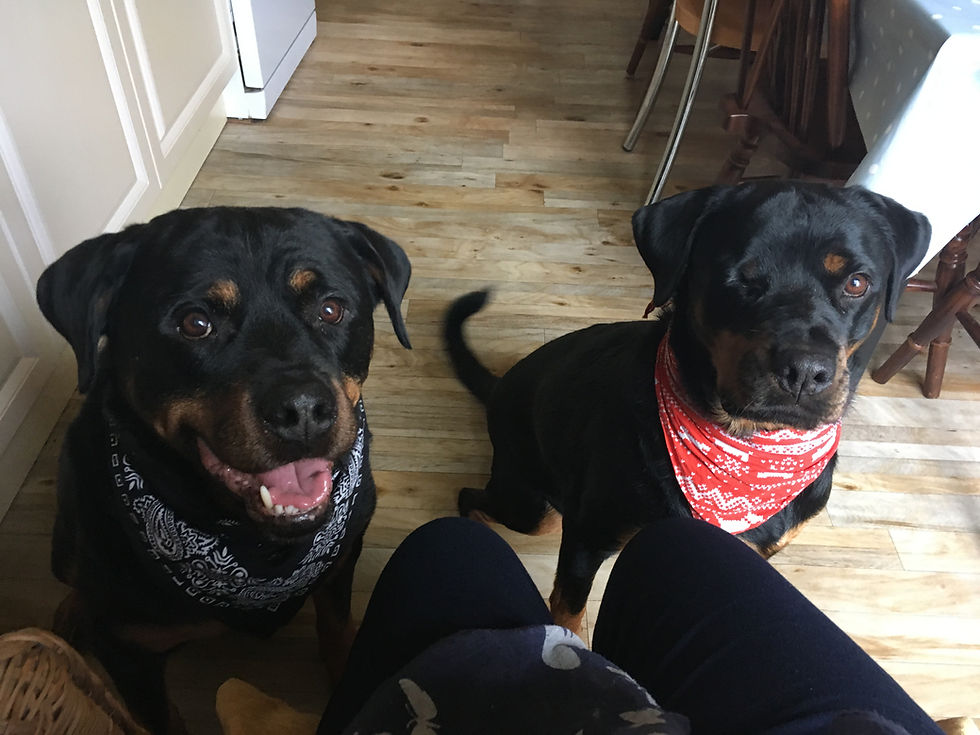
Over a relatively short period, I lost the three people I shared my life and home with, following deeply traumatic illnesses. During that same period, I also lost my two beloved dogs.
Five enormous holes appeared in my world.
My home, once filled with six living beings, had become a house with just one. Me.
And the silence was deafening.

Anyone who has experienced the long, drawn-out grief of watching someone you love suffer through a terminal illness will understand that bereavement doesn't begin when someone dies.
It begins much earlier.
It begins with the diagnosis, the appointments, the treatments, the desperate hope, the exhaustion and the creeping realisation that life as you know it is changing beyond recognition.
I spent much of that time nursing my family members through their final illnesses. I wouldn't have wanted to be anywhere else, but the emotional and physical demands were immense.
And there was an additional complication.
I have M.E.
The Illness You Can't See
M.E., or Myalgic Encephalomyelitis, is a complex, debilitating chronic illness that affects far more than someone's energy levels.
It's often misunderstood as simply being tired.
If only.
One of its defining characteristics is something called post-exertional malaise, where physical, cognitive or emotional activity can cause a significant worsening of symptoms, sometimes delayed and lasting days, weeks or longer.
And when I say activity, I don't mean running a marathon.
Sometimes it can mean having a conversation, concentrating on a task, taking a shower or simply dealing with the ordinary demands of daily life.
The cruel irony of M.E. is that the harder you try to push through, the worse you can become.
During the illnesses and deaths of my loved ones, I pushed myself far beyond what my body could sustain.
And eventually, it presented me with the bill.
My M.E. deteriorated to a level I'd never experienced before. For several months, I was more or less bed-bound, struggling with an illness that had become considerably more severe than anything I'd previously known.
There were days when even the smallest task felt monumental.
And somewhere in the middle of all that, my ability to write simply disappeared.
When Grief Silences Your Imagination
I've often wondered whether grief and creativity occupy the same little corner of the brain.
Because as grief moved in, creativity seemed to pack its bags and leave.
For someone whose imagination normally runs riot with ancient gods, supernatural conspiracies, murderous assassins and characters getting themselves into all sorts of trouble, the silence was extraordinary.
I couldn't write.
Not because I'd run out of ideas. Not because I'd fallen out of love with storytelling.
I simply couldn't reach the part of myself that created stories.
Writing requires a certain amount of emotional and mental freedom, and I had very little of either.
There was also something particularly frustrating about losing the ability to escape into fictional worlds just when I could have done with escaping reality for a while.
But grief doesn't operate to a timetable, and neither does chronic illness.
It took me a long time to accept that.
Learning That Rest Isn't Laziness
One of the hardest things about living with an invisible chronic illness is the guilt.
The guilt of cancelling plans. Of leaving jobs undone. Of saying no. Of needing help. Of watching other people accomplish things that once seemed effortless.
And perhaps worst of all, the guilt of resting.
I've always been someone who likes to get things done. Give me a problem and I'll try to solve it. Give me a challenge and I'll throw myself at it. Tell me something can't be done and, well, you've probably just guaranteed that I'll have a go.
It's a personality trait that's served me rather well in many areas of life.
With M.E., however, it's not always particularly helpful.
I know I'm not alone in that. People who've spent their lives in demanding careers, competitive environments or simply taking responsibility for everyone around them can find it incredibly difficult to accept that pushing harder isn't necessarily the answer.
When your instinct is to work through a problem, being told that you need to stop can feel like failure.
And when your illness is invisible, it's remarkably easy to convince yourself that perhaps you should just try a little harder.
But M.E. doesn't respond to determination in the way an overdue deadline might.
I had to learn about pacing: recognising my limited energy, managing how I spent it, and resting before I'd pushed myself beyond my limits.
Not just physically, but mentally and emotionally too.
And the hardest lesson of all?
My recovery only began when I stopped seeing rest as laziness and started seeing it as my job.
Rest became my priority. Not something I was permitted to do after everything else was finished, but something I needed to protect if I wanted any chance of improving my health.
It went against almost every instinct I had.
And it was one of the most important lessons I've ever learned.
I don't pretend that pacing is a cure for M.E., or that everyone with the illness will experience the same improvement. It isn't that simple. But carefully respecting my limits has made a meaningful difference to my own life.
I Hadn't Quite Disappeared
Now, before anyone imagines I've spent the last few years entirely absent from the book world, I should probably put that impression right.
I haven't been writing new novels, but I haven't completely abandoned my author life either.
I've relaunched my books with new covers, continued sharing my love of ancient Egypt and mythology on social media, and even managed to attend book signings and events when my health allowed.
Those activities gave me something valuable to hold on to.

They allowed me to remain connected to the world of books, to readers and to the creative life I'd worked so hard to build, even when I couldn't manage the actual writing.
And there were some lovely moments along the way.
Talking to readers, discussing Egyptian mythology and seeing people discover my books reminded me that the stories were still there.
I just needed to find my way back to telling them.
Finding My Way Back
It's now been around two years, and I'm slowly emerging from what I can only describe as a very long journey through grief.
I don't think you ever entirely leave grief behind. You learn to carry it differently.
But something rather wonderful has begun to happen.
As my health has gradually improved, so has my desire to write.
And not just a little.
I feel a renewed excitement about my stories, my characters and the worlds waiting impatiently in my imagination.
There's also a new appreciation for life itself.
For the small pleasures we overlook when we're busy. For the things we're fortunate enough to be able to do. And, perhaps most importantly, for the people who stand beside us when everything falls apart.
I've discovered just how precious those people are, and how much difference kindness, patience and practical support can make when someone is struggling.
I won't pretend that everything is suddenly easy, or that I'm back to the person I was before.
I'm still learning to work within my limits. I'm still pacing myself. And there are still days when my M.E. has other ideas about what I should be doing.
But the desire to create has returned.
And after such a long silence, that's a wonderful feeling.
So, What Happens Next?
Well, I'm writing again.
Slowly. Carefully. And with rather more respect for my health than I've shown it in the past.
I'm returning to my fantasy world of Born of Angels, with its angels, vampires, supernatural secrets and the streets of Cairo providing a backdrop for an entirely new adventure.
My love of Egyptian mythology and historical fantasy hasn't disappeared either, and I'm still enormously proud of the House of Scarabs series.
There are plenty more stories I want to tell.
I just intend to take a rather different approach to telling them.
No punishing deadlines. No pushing through at the expense of my health. No treating rest as something that has to be earned.
Because if the last few years have taught me anything, it's that life is far too precious to spend it fighting against the very things we need to stay well.
And if you've been wondering where I've been, thank you for still being here.
It means more than you might imagine.
The imagination is awake again. And I have rather a lot of stories to tell.
For more information on M.E. visit Action for ME or the ME Association


Comments